

Home News & updates Article Connected simulators, connected sectors: Preparing for emergencies with TotalControl
An emergency is unfolding at Christchurch Airport. An air traffic controller responds as cockpit alarms sound, the pilot’s voice comes through muffled by an oxygen mask, and emergency services are coordinated and moved into position.
Except none of it is real.
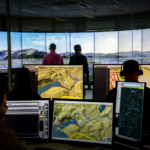
It’s all part of a carefully developed exercise inside the TotalControl air traffic control training simulator, bringing Airways New Zealand’s Christchurch Tower (aerodrome) and Christchurch Terminal Approach (surveillance) teams together for six days of combined cyclical training.
For the first time, controllers from both areas were able to train together within one coordinated simulation, responding to the same developing scenario and working together as they would in an operational environment.
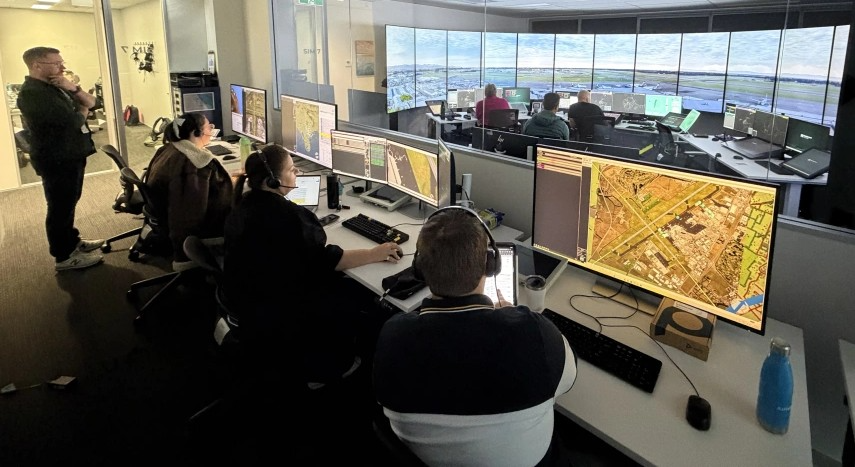
In the simulator, controllers from Christchurch Tower and Christchurch TMA worked through the same unfolding scenarios, coordinating their response as events developed.
Bringing the two areas together might look seamless from the controller’s seat, but behind the scenes were months of planning, development, testing and collaboration across Airways. To put the scale of the work into perspective – two 40-minute training exercises took over four months to create.
At the centre of the Tower simulation environment is TotalControl. This training provided a great opportunity to see the system working alongside the wider simulation environment in a complex, coordinated exercise.
Simulator Team Lead, Luca Ruzzon described creating the exercise as “a bit like putting together a movie.” Every detail helped set the scene but, unlike a script, the scenario also needed to adapt depending on the decisions controllers made in the moment.
The level of realism achieved didn’t happen by accident.
“For this specific training, we reached a level of accuracy that is quite rare,” says Christchurch TMA Deputy Team Leader Chris Borrill, who developed the emergency scenarios.
Everything from aircraft movements and weather, to smoke and the positioning of emergency vehicles had been thought through, tested and refined. The team even considered exactly where smoke should appear on an aircraft, what side of the aircraft people would evacuate and where fire trucks would realistically position themselves.
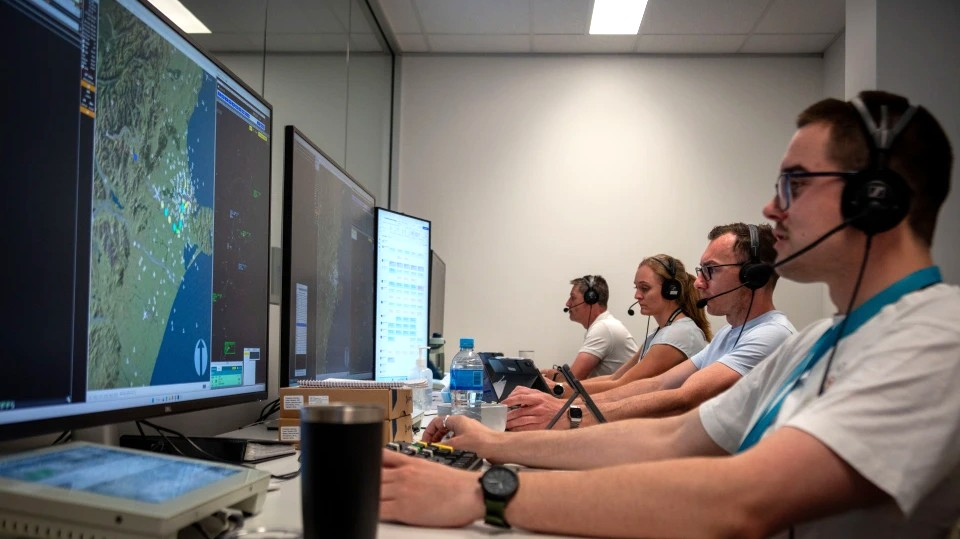
The sim pilots played a crucial role in bringing that realism to life. They not only had to develop their own methodology for “handing” aircraft to each other, but they were even asked to up their acting skills to near-Hollywood levels.
During the emergency, sim pilot Dom Grinter went the extra mile, muffling his voice to recreate a pilot communicating through an oxygen mask and using real cockpit emergency sounds to help set the scene.
It might seem like a small detail, but it’s those touches that help turn a carefully developed exercise into something controllers can become completely immersed in.
And while there was a script to follow, flexibility was needed. If a controller made a different decision from the one anticipated when the scenario was developed, the sim pilots needed to adapt as the situation unfolded.
It’s that combination of technology, preparation and people reacting in the moment that made the exercises feel so realistic.
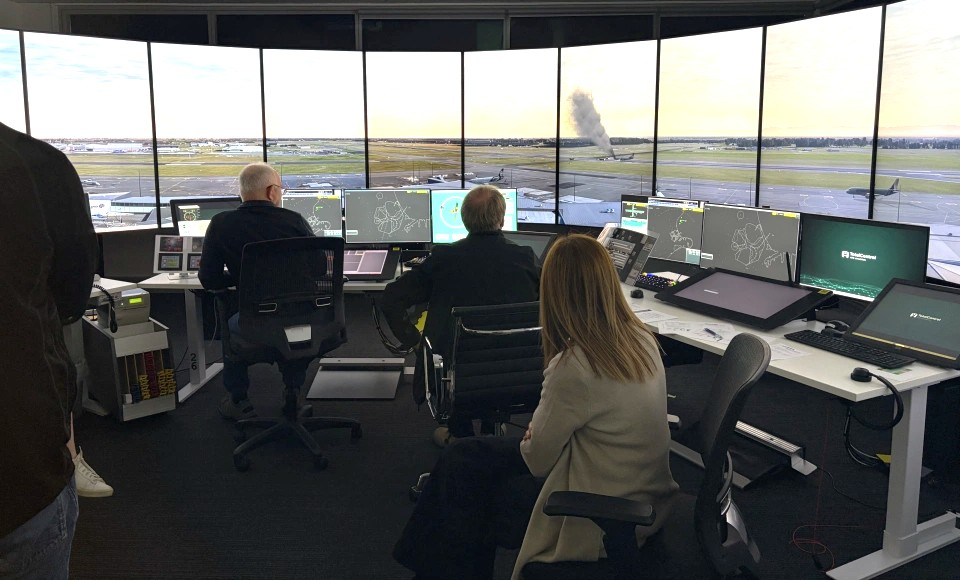
Reaching this milestone was very much a collective team effort across Airways.
The two exercises combined technical expertise, operational knowledge and detailed scenario development to give controllers a realistic environment in which to train together. Bringing two sectors together was also no easy feat – significant work went into ensuring rosters allowed both the Christchurch Tower and TMA teams to attend and benefit from the programme.
What has been created extends beyond these individual exercises. This work has established a combined training capability that can continue to be developed and refined, building on what the teams have learnt along the way.
For the controllers and sim pilots responding in the moment, that commitment to realism made the training feel anything but simulated.