




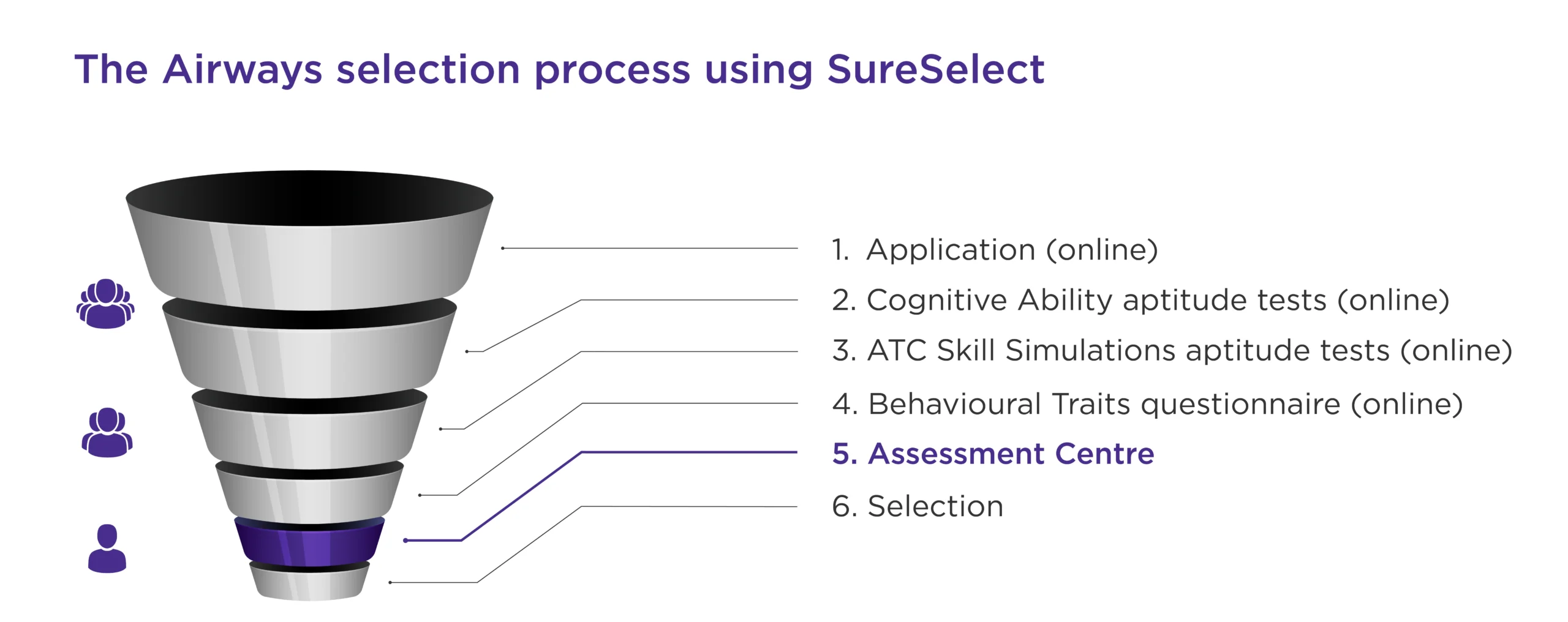
By the time a potential air traffic control training candidate walks through the door of the Airways Assessment Centre, they have already cleared three rounds of online testing. They’ve demonstrated cognitive aptitude, navigated ATC-specific skill simulations, and completed a behavioural traits questionnaire. On paper, they look promising. This is all part of the rigorous air traffic control selection process. But for assessors Colin Prescott and Jim Dunn, the day is only just beginning.
“Up until this point they are a name and a set of results with an ambition to become an air traffic controller,” says Colin, an experienced Airways controller who has been assessing candidates for 15 years. “The Assessment Centre allows us to meet the candidates, see them interact with assessors and fellow candidates, and observe how they respond to the pressure that the day brings.”
For Airways International’s Head of ATS Training Kelly de Lambert, the Assessment Centre is a pivotal part of Airways’ SureSelect ATC selection process and sits at the heart of Airways’ consistently high ATC training success rates.
“The candidates who successfully make it through our selection process and into our training academy aren’t just hopeful, they’re ready,” she says. “We would always rather understand a candidate’s limitations in an assessment environment, than discover them six months into a training programme. That’s a far better outcome for the candidate, for us, and for the industry.” It’s a principle that assessors Colin and Jim know well, and how they approach Assessment Centre day.
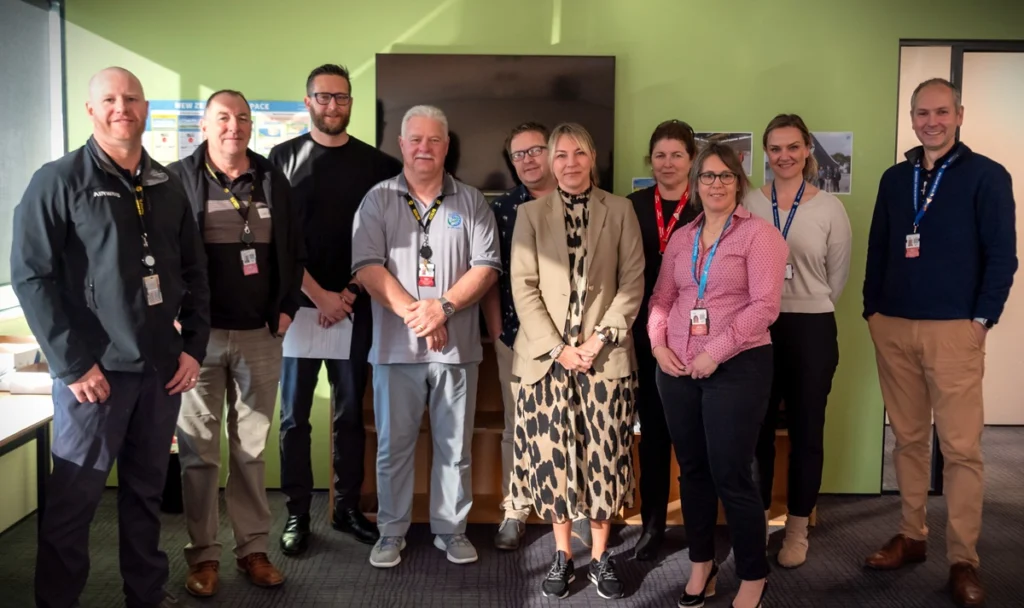
Jim, who has more than 20 years of assessing experience, says: “It’s where we get to see the candidates face-to-face, under pressure in group and individual situations. You see how they interact with others and what behaviours they bring to the table.
“I think you can often tell if someone thinks and acts like an ATC. We have a ‘type’, which can be difficult to pin down. That’s why the characteristics and behaviours we look for need to be quantified, so we can measure them against what a controller would do.”
What we’re really looking for
Each Assessment Centre day is structured around four components, together revealing a candidate’s full picture against the 10 core competencies we’ve identified as necessary to become a rated ATC:
- A competency-based interview
- Individual ATC exercises
- A group exercise
- A validation test of cognitive and ATC-specific aptitude skills.
In the group exercise, Colin notes that an outside observer might see apparent chaos – noise, disorganisation, competing voices, the stress of a shared task. Both assessors know exactly what they’re watching for.
“We’re looking for people who remain calm, communicate well and correctly, and contribute to the success of the group as a whole,” Colin says. From Jim’s perspective: “I’m looking for the candidate to manage the traffic on the screen without getting wound up or overloaded, and still have the capacity to assist others and enhance the team’s performance.” Air traffic control selection places a strong emphasis on teamwork and composure.

The individual exercises are more intense. Colin says: “It’s incredibly important that candidates understand how the exercises work and what rules they need to apply, so I take as much time as necessary to ensure this before we start. This ensures the candidate the best chance of success.”
For Jim, what separates those who thrive from those who struggle comes down to composure and judgement. “A successful candidate will solve not only each individual problem, but also keep an eye on the big picture and assess what’s likely to happen next.”
One moment from Jim’s experience captures this well. A candidate sat quietly through an entire briefing, then said nothing for the first minute of the scenario. “When they finally started speaking, they gave me not just one but several solutions to the problem, together with some what-ifs to try if the first solutions didn’t work.
“It’s a reminder not to rush to judgement. Some candidates will race into it, and some will take their time. Both can have the potential to be successful.”
Why rated controllers make better assessors
Most Airways Assessment Centre assessors are experienced operational ATCs, and both Colin and Jim consider this essential. “We can recognise the qualities we seek in others, and can assess whether or not someone will make it in the world of ATC,” Jim says.
Colin highlights the practical advantages. “By using controllers, we can provide candidates with realistic examples of pilot responses in the operational environment. We can also adapt exercises in real time to assess particular aspects of a candidate’s performance.”
“Our assessors have worked at many locations, in New Zealand and overseas, in tower and surveillance roles. That experience allows us to consider how a particular candidate would respond in the training or operational environment.”
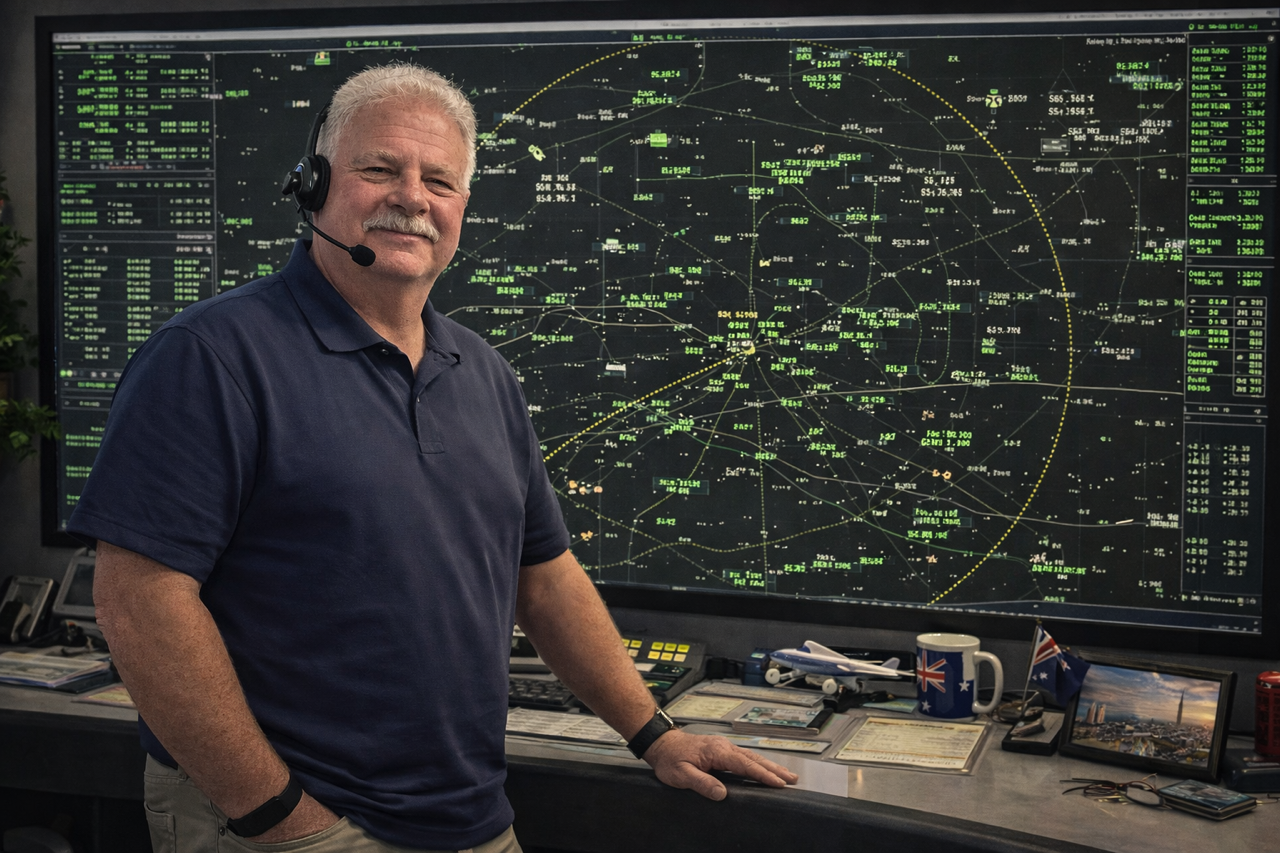
ATC selection process refined over decades
Both Colin and Jim have watched the Assessment Centre evolve over the years. “When I started, the individual and group exercises were not computer-based,” says Colin. “The move of SureSelect to the cloud has enhanced the performance of the product and helped streamline assessment days.”
Jim adds: “From a customer perspective, computer-based assessments have higher face validity, moving with the times, than a desktop-type exercise. It also enables automatic features that make candidate assessment easier at data integration time.”
Watching candidates become controllers – the greatest reward
Assessment Centre weeks are demanding. Colin says they’re long days: “Three different individual candidate assessments, observation of one or two candidates in the group exercise, then wrap-up after the candidates have departed. We’re recording evidence for each candidate against the competencies, and it needs to be accurate so we can revisit it and still understand what we’ve observed.”
But the reward is clear. “When successful candidates turn up at the tower or radar centre and I remember them from the Assessment Centre, it’s great to reflect that I was there at the start of their ATC career.”
Jim adds: “I’ve been involved in selection for over 20 years and I’ve seen a lot of people go on to become very successful in the profession, that’s comforting to see.”
To any air navigation service provider considering the SureSelect Assessment Centre approach, both assessors have some advice. “Come and see the SureSelect product in action at one of our Assessment Centres. Understanding the process is a big part of seeing why what we do is successful,” says Colin. And Jim’s advice: “If you want the best results, you need to apply best practice to your selection. Our success rate speaks for itself.”